 |
 |
 |
||||
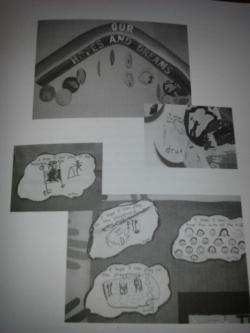
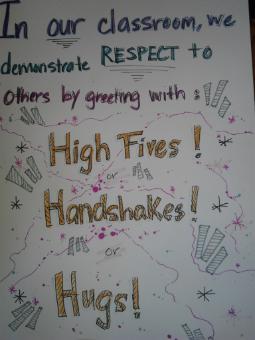
High Leverage Practices In order to establish classroom rules and norms to maintain a constructive classroom that displays a sense of fluidity during daily classroom practices, I will implement the “Hopes and Dreams Strategy”. The strategy uses positive language to establish classroom expectations and structure that is needed for students to achieve their academic and social goals within a classroom setting. (Charney, 1991) Through student voice and input, an authentic sense of accountability and self regulation will be established, as students establish a sense of awareness in terms of how and what is needed to be “successful” while placing less emphasis on controlling student behaviors (Charney, 1991; Le Page 2005). Students need an environment that is conducive to learning while adhering to positive social interactions. Implementing the 3H’s (Hugs, Handshakes, and High Fives) for daily classroom practices will allow for the use of choice and the development of “life long” social skills as students have the opportunity to build and secure strong relationships while using positive behavior amongst one another. (Charney 1991; Jensen 2009; Mantiates 2001) The strategy also exhibits teacher investment in individual students to create a shared classroom climate that fosters positive student attitude towards academics and behaviors (Charney 1991; Mantiates 2001)
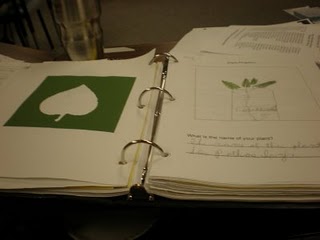
Parental Involvement is dire to student achievement. In order to help build and develop deep and respectful relationships that adhere to student learning and behaviors, I will use a monthly Parent Newsletter to inform parents of classroom activities, special events, updates, birthdays, student accomplishments, parent requests and input as well as other pertinent classroom information (Allen 2008; Mantitates 2001) In order to display an investment in individual student learning, the newsletter will also strive to develop a sense of community by correlating the home and cultural environment of students within the classroom through parent volunteerism, input, and constant utilization of families as classroom resources (Allen 2008). In order for students to become academically successful, they must learn to how to value learning and gain an understanding for the significance of their education. In order to encourage student motivation for learning, I will use student portfolios to individually track student work and document progress, as well as the classroom practice of the individual desk Red/Green Cups to check for student comprehension and understanding during lessons and activities. Through these specific strategies, students will learn how to self monitor and regulate their accomplishments by having control of their specific learning experiences (Charney1991; Le Page 2005). With these specific strategies, students will be able to identify their individual strengths and weaknesses through the progression of their work allowing them to build confidence and thus adhering to developing intrinsic reasoning for their learning. (Charney 1991; Le Page 2005) Community in the Classroom In their book, "Differentiating Instruction in Inclusive
Classrooms"Haager and Klinger provide an organized and very clear
description of the prevalent disabilities in an educational setting. The
definitions, characteristics and individual vignettes/scenarios of each
disability provide an in depth look to specific behaviors that our
students in our new turn around schools may exhibit. To support such
information Downings ‘Including Students with Severe and Multiple
Disabilities in Typical Classrooms” provides effective strategies that
we can incorporate into our daily classroom practices to establish a
sense of community and equality amongst all of our students.
Turn Around Experience: This year as part of our training, we were able to visit turn around sites and complete lead teaching segments with a new group of students with the implications that we should view the experience as if it were our first day of school in a turn around setting. My experience at Curtis School of Excellence has been a very uplifting one, as it has opened my eyes towards a different perspective of teaching. I have found that in the last couple of weeks that I have been under the supervision of my host teacher, I have grown and worked on continuing to develop my teacher presence and confidence as a novice teacher with increased support and positive feedback from the individuals around me. In creating our blocking grid during our Spring Academy, I learned to appreciate the value of explicit and sequential planning to a greater extent. Viewing our blocking grid as if it were the first day of school helped me understand the essential process of explicitly demonstrating and reminding students of school norms and expectations, as opposed to leaving situations open for individual interpretation. Cohesion and a safe space can only be achieved if high expectations are set, and students are given the opportunity to see and hear what it looks and sounds like, following opportunities for guided practice. |
||||||

